

Above: A consultant’s pitch for community engagement seems to have helped them cinch the contract for a new Neary School Feasibility Study. (image from Tappe Architects’ presentation in ESBC meeting video)
On Tuesday, the Select Board approved a key stage for studying renovation options for the grades 4-5 school building.
The board awarded the bid to a new consultant to conduct the feasibility study and create schematic designs. (That vote is contingent on successfully negotiating a contract.)
The bid was awarded to the firm recommended by the majority of the Elementary School Building Committee (ESBC). Tappe Architects beat out other bidders, including the architects for the former New Neary Building project (Arrowstreet).
A memo from ESBC’s Chair states:
Tappe demonstrated a clear and structured approach to feasibility work, including thorough evaluation of existing conditions, development of multiple viable options, and a strong ability to guide decision-making through cost, scope, and educational trade-offs.
ESBC member Andrew Pfaff told Select Board members that Arrowstreet had some existing ideas of how the town could move the project forward, but “didn’t really bring anything new to the table in terms of, ‘this is what we could have done differently. This is what we want to do.’.”
The committee preferred Tappe’s presented approach which was much more about creating community consensus. That included marketing, videos, and creating a tax calculator. (Last time, the Town had to create the calculator.)
Select Board members Tim Fling and Al Hamilton, who were critics of the prior project’s expense, were pleased to have fresh faces involved in rebooted study.
The approval had been listed in the board’s Consent Agenda (which allows quickly approving a list of items). School Committee member Roger Challen told the board he was relieved that they pulled it out for discussion.
Tappe was one of three applicants for the RFS (Request for Services) that the ESBC selected to interview. Challen expressed concern that only three of five members participated in the interviews and vote on April 15th. He noted that the two members absent were among the three he believed had the right experience for selecting an architectural firm.
He asked if Superintendent Greg Martineau had provided feedback in the interviews. The answer was no.
Pfaff pointed out that noted that the members who had been absent could have asked the meeting to be rescheduled and didn’t. And he highlighted that the presentations and interviews were available on video for the public to watch.
Martineau and ESBC member Jason Malinowski were both part of the April 8th meeting where the committee discussed the timing of the process.* Both voiced support for the committee moving forward without them rather than delaying the process. (For Martineau, the April 15th conflict was the monthly Regional School Committee meeting.)
Malinowski participated in the April 13th meeting in which members narrowed down the bidders to be interviewed. But he abstained from that vote since he couldn’t attend on the 15th.
Although he didn’t think his input needed, as the former chair of the Neary Building Committee, he understood the importance of the vote. On April 8th, he stressed:
this quite possibly could be a more important decision than than anything else we decide as a committee including what ends up on a warrant down the road of whatever project comes forward. . . this professional that we’re going to hire is going to guide us through the process, answer the tough questions and have to obviously think creatively given the constraints we’re going to be working with in terms of the options.
Challen expressed concern that residents may later criticize the decision as having only been made by three members. But his greater concern was being transparent at this point. He believed highlighting the process now was better than it coming out later.
Paff told the Select Board that they could apply the brakes to the process if they wanted. They could have the other two members watch the video and the committee could revote. But he indicated that would push the timeline back by a year.
The Select Board approved the committee’s recommendation unanimously.
In Tuesday’s meeting, Pfaff said the ESBC had authorized him to represent them in working with the Superintendent’s team to negotiate the contract.
The interviews
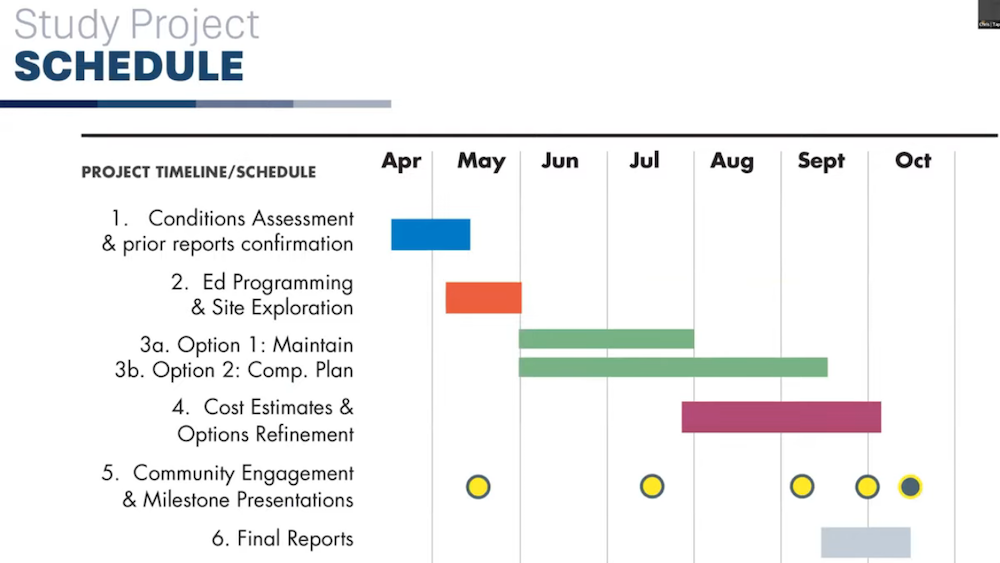
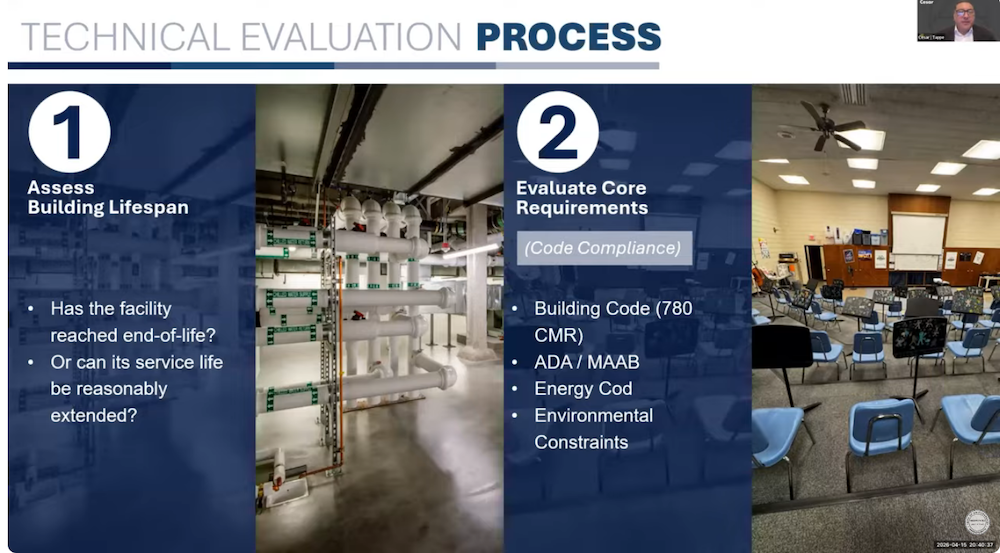
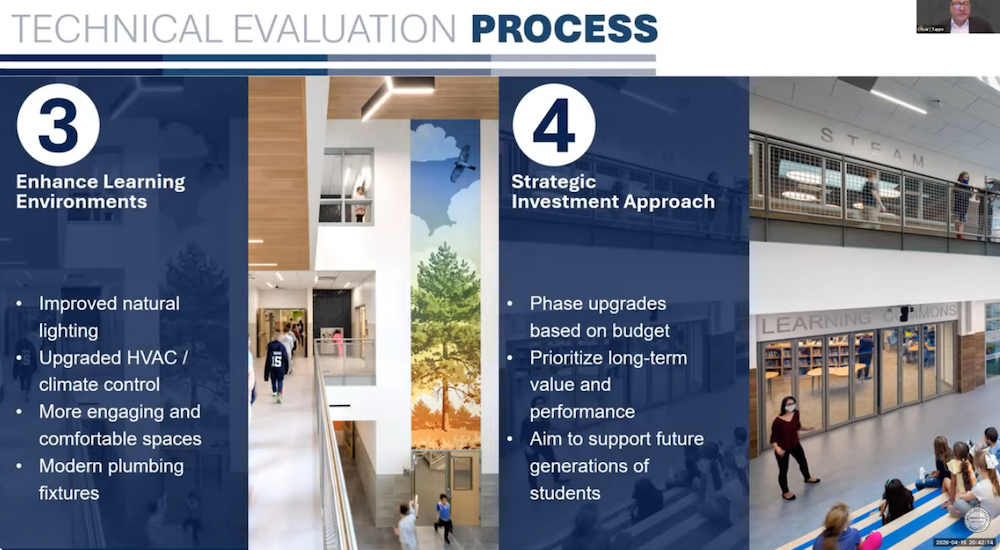
You can watch the presentation by Tappe and their interview by the ESBC here. That’s followed by the committee’s deliberation and vote. (And if you go back to the start of the meeting, you can also catch the presentations by Arrowstreet and RGB.) Below are a few slides about Tappe’s presented timeline and process:
In that meeting, ESBC members debated whether communication skills were a strength for Tappe. Heather McLeod liked what they had to say about their approach, but said she didn’t see it exemplified in the interview. In contrast, Pfaff opined that Tappe’s Chris Blessen had the best quotes, which Pfaff had taken down in his notes.
McLeod clarified that Blessen eventually got there. But, putting herself in the seat of “a towns person coming and trying to understand things, I think that [Blessen] would struggle to get his point across”. But she followed that was only one aspect to consider. She and others also noted that another member of their team was clearly only reading from a script.
McLeod also noted that she had heard criticism that Arrowstreet’s communication style as having put off the public the last time around. She described them as having been accused of being arrogant.
In assessing competitor RGB, members made clear that one of that team’s talking points didn’t sit well with them. Representatives described how they like to take committee members out to drinks, get to know them and find the “core” members they can work with to agree on things and get things done.
But in a memo to the Select Board, the ESBC Chair Craig Williams focused on RGB not having demonstrated “as clear a process for option development or community engagement.”
Who are the ESBC members?
Since I never covered the interviews and appointments. . .
In their March 31st meeting, the majority of the Select Board voted to appoint two former members of the Neary Building Committee Andrew Pfaff and Jason Malinowski, along with a newcomer — retired developer Robert Moss.*
They didn’t select former NBC and PreK-8 School Building Committee member Mark Davis or Select Board member (and former PreK-8 School Building Committee member) Tim Fling.
At the time, Select Board members said that they believed the educators who applied were best left to the Southborough School Committee to appoint.
In a subsequent meeting, the School Committee appointed Craig Williams (Principal of Franklin Middle School) and Heather McLeod (a long time instructor and teacher, currently working for Boston Collegiate Charter School).
You can find all of their volunteer applications in the March 31st meeting packet here. (The RFS applications haven’t been posted anywhere that I could find.)
*Updated (5/6/21 9:10 pm): I was informed that Robert Moss wasn’t able to attend the April 13th & 15th meetings due to a family emergency.
