
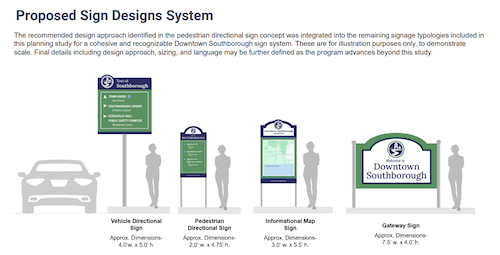
Above: Mass is forking over more money for designing new signs for Southborough as part of its economic support for revitalizing downtowns. (image from presentation)
As I posted earlier, Southborough was awarded two grants through the state’s “One Stop” application process. The smaller of those grants was $77K for Phase 2 of the Town’s “Wayfinding” project.
The decision for the Town to pursue more funding for the downtown branding and signage project is notable given the Town’s current financial issues.
The Select Board has been aware for over a year that they were entering fiscal years in which they will struggle to put together a budget that doesn’t require a proposition 2½ override approval by voters.
The Wayfinding grant doesn’t require a Town match. Town officials tend to treat these kinds of grants as “free money” and be considered a financial win.
But the intent is to further pursue designs for signs that would need to be built and installed — either through Town funding or more state funding. And the Select Board, who greenlit applying for the grant, should understand that “time is money”. The project will require continued, and potentially increased, involvement by Town Departments and boards during the next project phase.
Select Board members recently debated with Advisory Committee members over how to handle their joint push to keep down the cost of Town budgets. The talks included potentially cutting Town employee hours. (And, of course, state funding that is “free” to Southborough’s operating budget isn’t free to the residents who pay state taxes.)
Yet, not following up on last year’s $30K grant to kickoff the wayfinding effort would have been telling those who put time into Phase 1 that their time was wasted.
At the time the Town originally applied Phase 1 of the project, it was pitched as needed “to welcome visitors and residents to the historic Downtown District” in time for Southborough’s Tricentennial — calendar year 2027. But even before the state was deciding on this round of One Stop grants, the Town was aware that goal won’t be achieved through this initiative.
 On June 16th, Whitney Burdge, from the contracted consultant firm Stantec, and Assistant Town Administrator Vanessa Hale updated the Select Board on the recommendations for signage. The board was told that even if the FY27 grant award came through in October, installation of signs would be unlikely to happen until at least the end of 2027 or early 2028. Burdge followed that they may be able to “at least get a prototype sign or two fabricated in that early round”. But the project won’t entail construction costs not covered by the grant application.
As for how much the Town would will ultimately need to spend on making and installing signs, that is largely dictated by the number and size of signs. The presentation recommended 26 signs (15 to direct vehicles, 8 to direct pedestrians, and 3 informational signs).
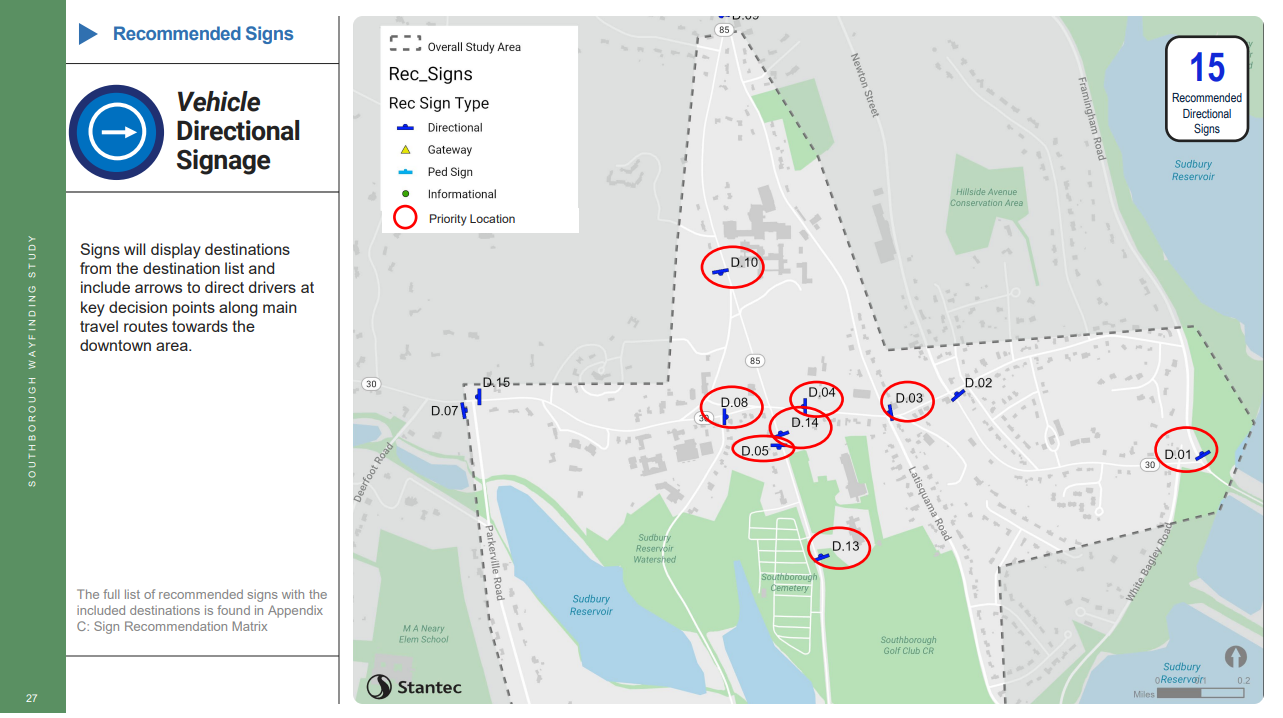
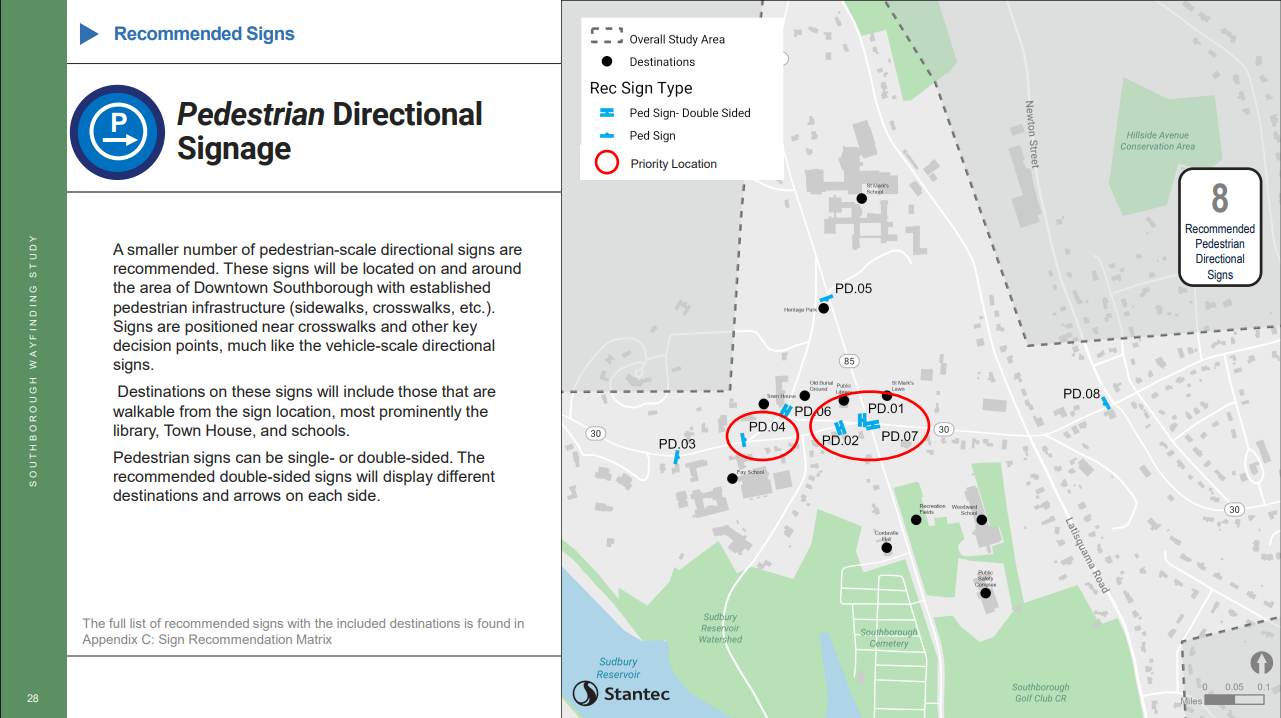
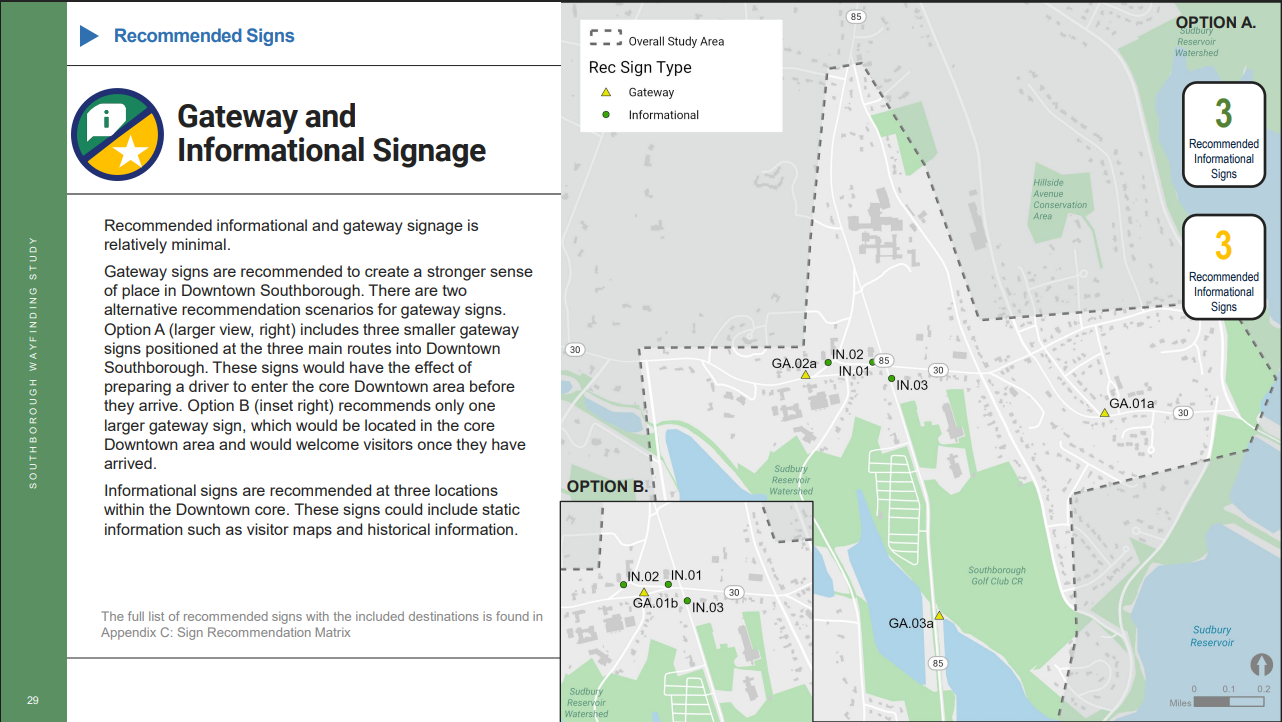
Select Board member Andrew Dennington highlighted that surveys conducted early in the process showed the community desired a “light touch” with signs. He didn’t oppose adding signs as long as they respect existing signage and just add a “couple careful placements”. Member Sam Stivers echoed that view.
In the June presentation, Burdge told the board they were presenting options based on results from their recent survey.
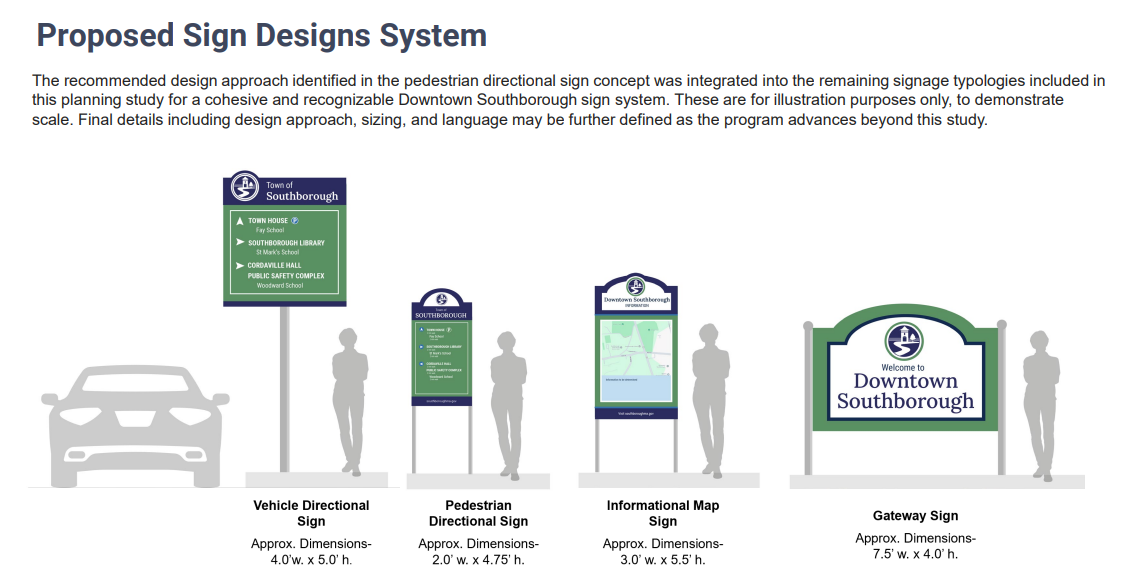
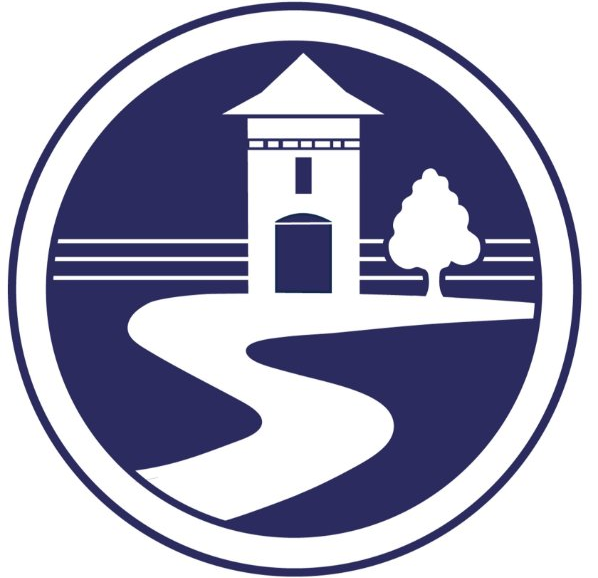 For the only 56 residents who were able to weigh in during the very brief (and apparently miscommunicated) survey window1 the options they were able to weigh in on were already quite winnowed down. The survey presented only one version of the “motif” logo designed for use on all signs (image right).
The survey explained that the image uses a tree to represent “greenery”, an S shaped waterway to symbolize both “nearby water assets” and Southborough, and a stone tower in the Rural Cemetery described in the survey as “a distinct architectural feature of the Town”.
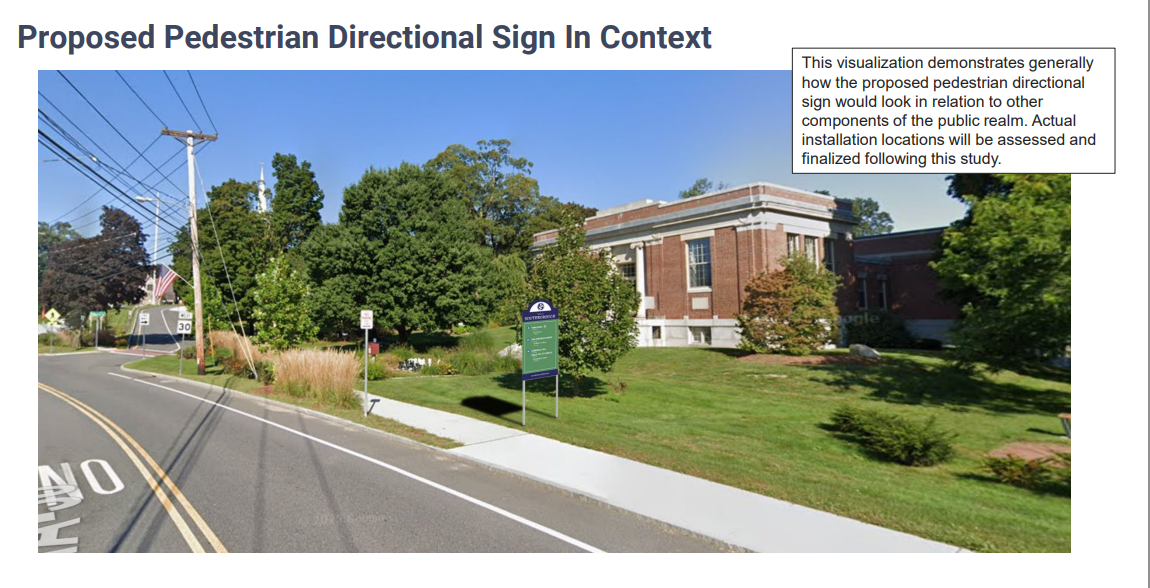
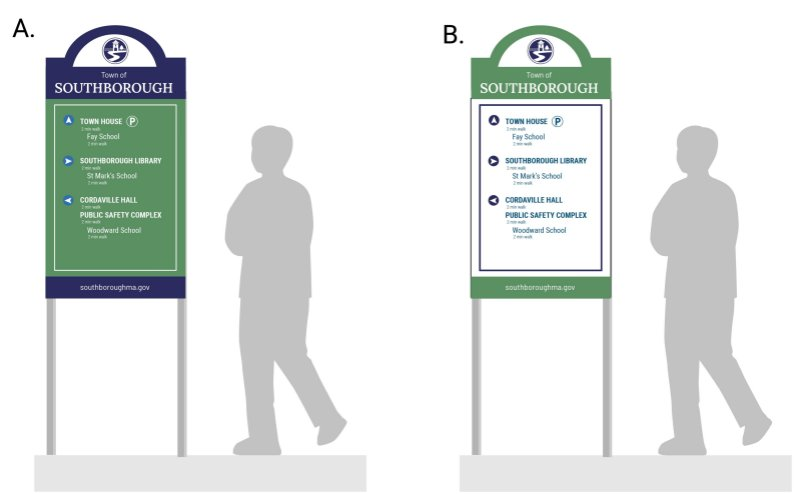 The image right demonstrated the type of sign that may be placed to help pedestrians navigate downtown Southborough. The survey asked for feedback on preference and whether they should revisit certain design elements.
In the June meeting, it didn’t sound like the Select Board was sold on the motif.
The presentation described the public response to the motif as split but with “twice as many people selected an option leaning towards liking or loving the concept (Level 3 or higher).”
As Dennington pointed out, the the actual figures of the results told a different story. The largest group of respondents was the 16 who responded with the strongest dislike. If you treat 3 out of 5 as neutral rather than favorable, only 19 liked the motif vs the 21 that disliked it. He suggested the motif be revisited with other options considered.
Dennington noted that consultants didn’t engage the community in the phase when they were designing and selecting that design. Instead they relied on discussions with the Town’s “the project team”. In the presentation the group was described as comprised of representatives from different Town
departments and institutions in Southborough.
Vice Chair Andrew Pfaff agreed with considering different images for the motif. He said that while he recognized the water tower in the seal, he didn’t think most of the public would.
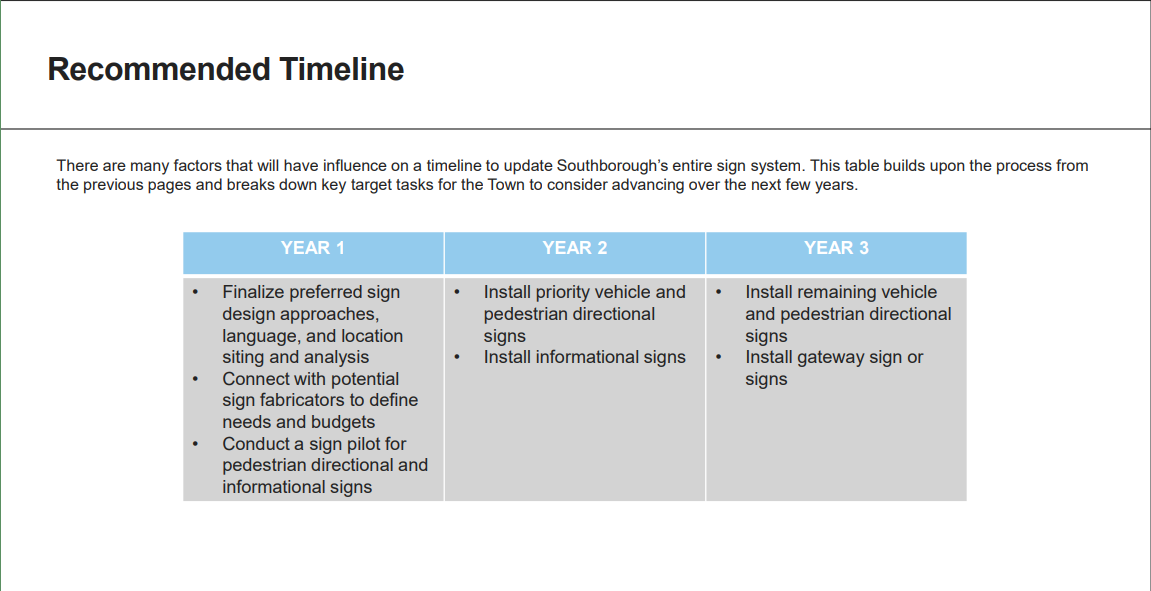
A recommended workplan for Phase 2 showed a lot more work is needed before the signs get to the final design and fabrication stage:
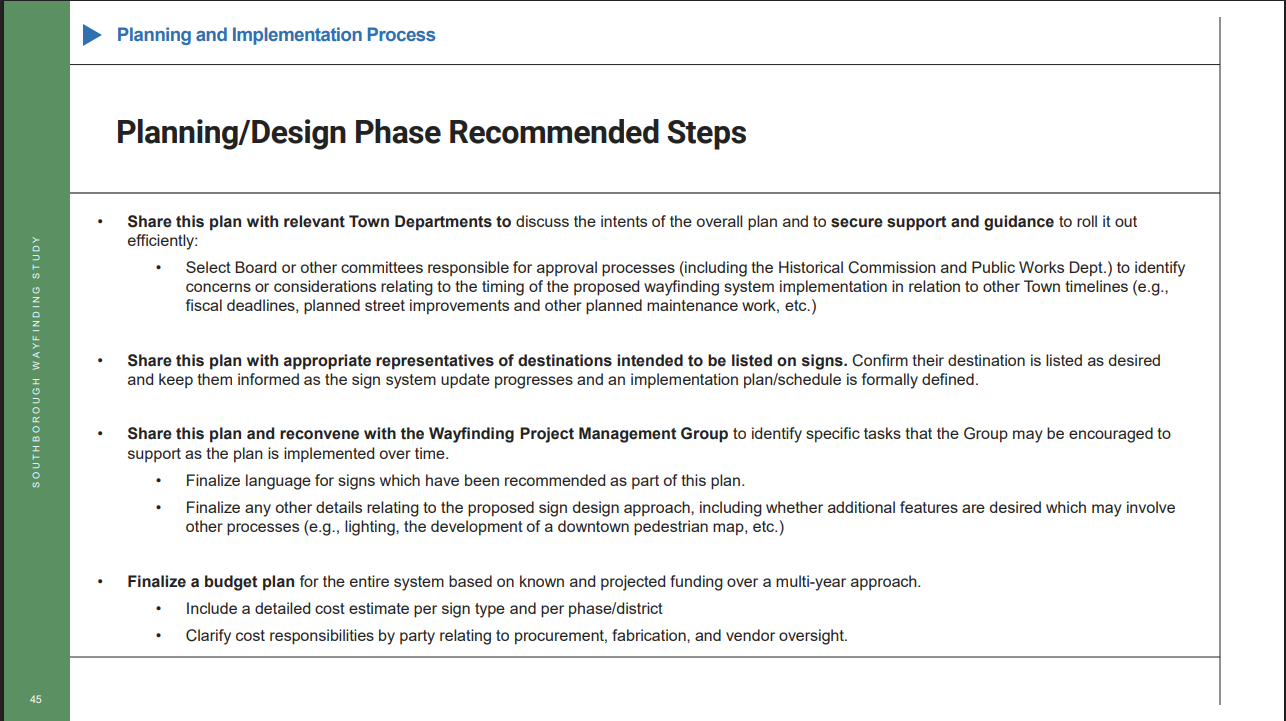
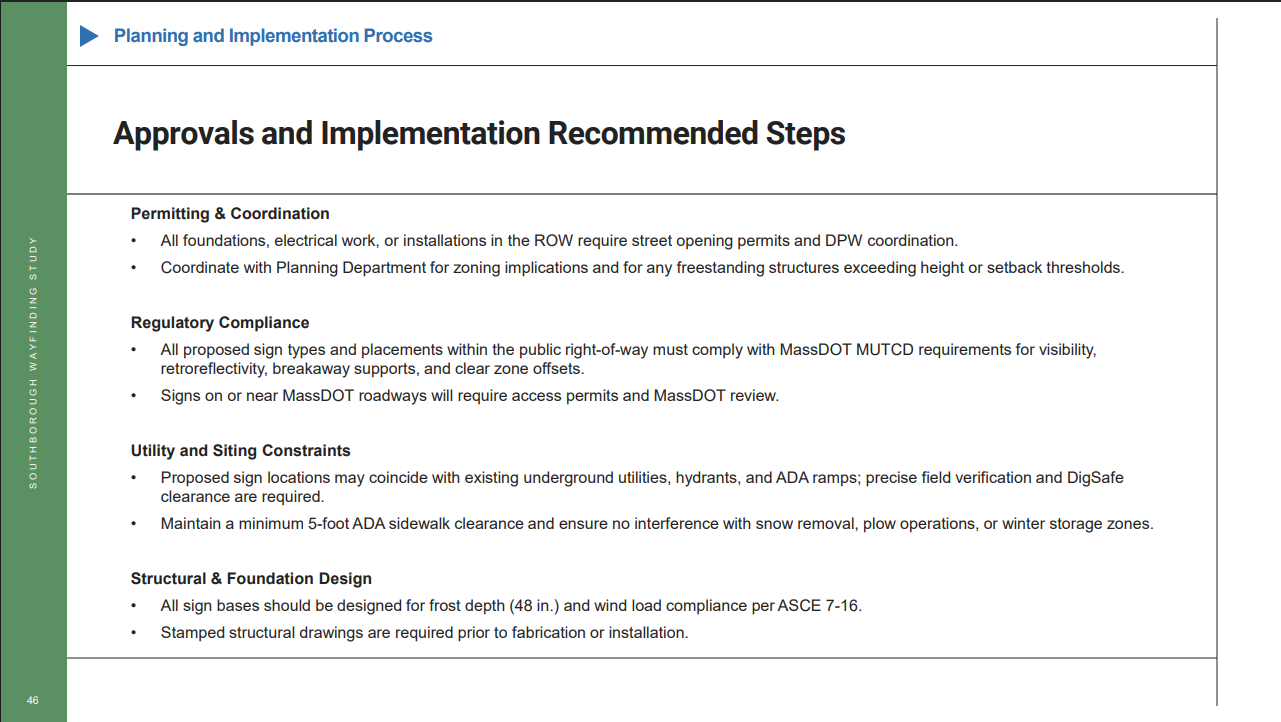
Chair Kathy Cook indicated that the board should revisit the topic at their July 7th meeting to be prepared for next steps if the grant came through in October. But the topic hasn’t been back on the board’s agenda since.
You can read the full presentation here and view the June discussion here.
- The presentation provided inaccurate information on the public window for completing the survey. While that was listed in the presentation as May 29th to June 8th, the live and communicated timeframes were much shorter. The Town’s public alert on the survey wasn’t issued until June 1st. In it, the deadline was promoted as June 5th. But I later saw Facebook comments posted on June 2nd by residents who were trying to respond to the survey but getting error messages that the survey was closed. Those issues, rather than lack of public interest, may explain why only 56 people responded to the survey. (I did notify the board after the July meeting, to make sure they are aware that there may be more community interest in weighing in than the number indicated.)
