
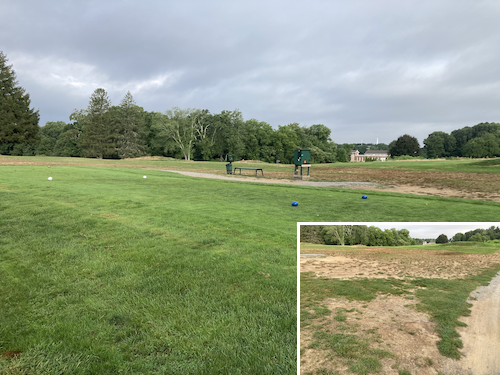
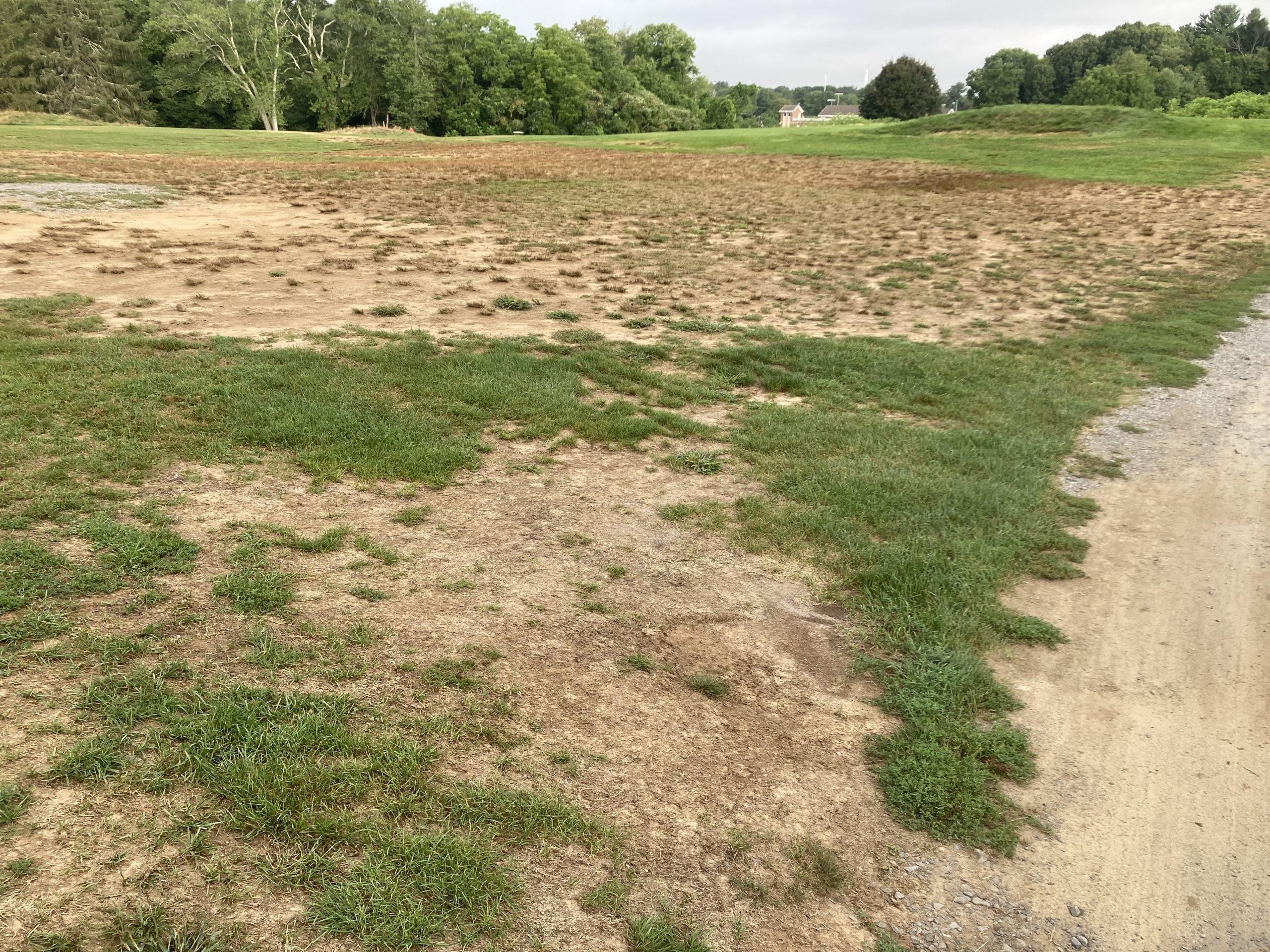
Above: Southborough voters will decide on whether to increase CPA funding for watering the golf course. (photos by Beth Melo)
Between now and the Special Town Meeting on Saturday, October 17th, I’ll be covering the Articles that voters will be asked to decide.
Today, I’m focusing on Article 3, a request by the Golf Course Committee to fund improving the irrigation system at the Southborough Golf Club. It’s one of two requests on the Warrant to increase previously authorized spending of Community Preservation Act (CPA) funds.
The Article will face opposition by the committee that advises Town Meeting voters.
In March 2024, Annual Town Meeting voters approved using $553,750 of CPA funds to improve the irrigation system for the Town owned golf course — the Southborough Golf Club. The pitch was that the system would more efficiently water the greens at the Southborough Golf Club. It was meant to replace an over 50 year old system “which is leaky, prone to failure requiring frequent repair, and time consuming to operate.
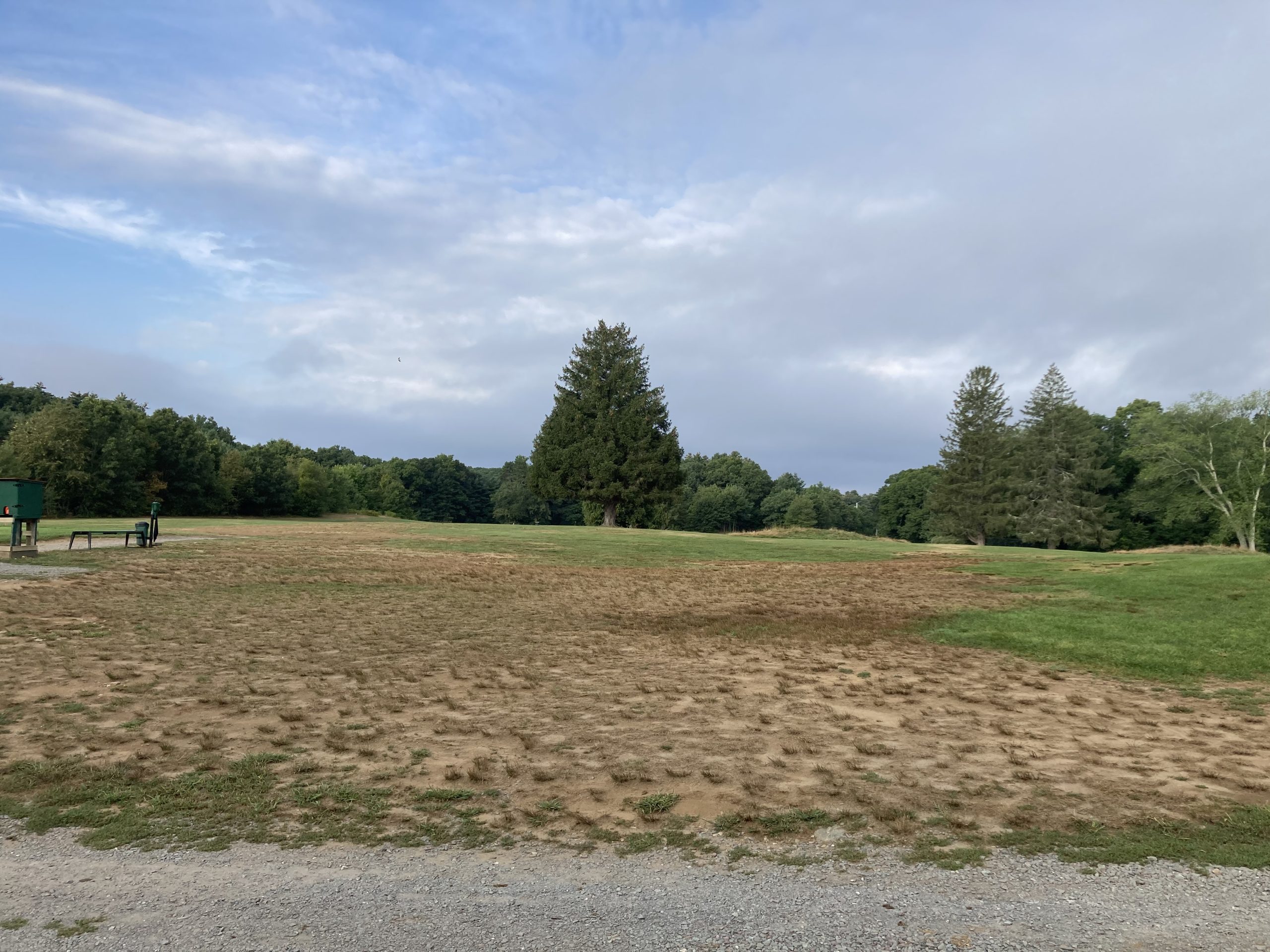
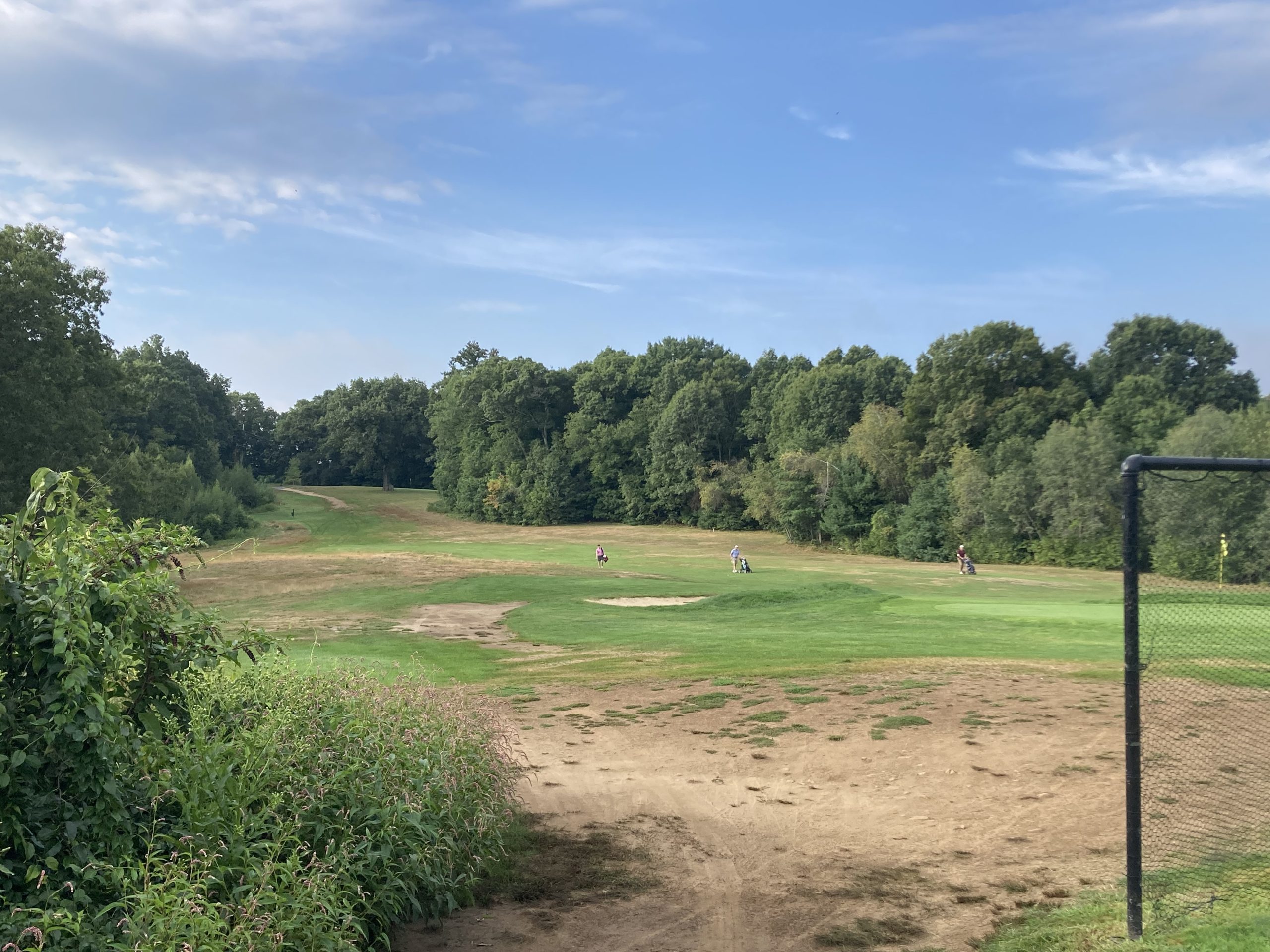
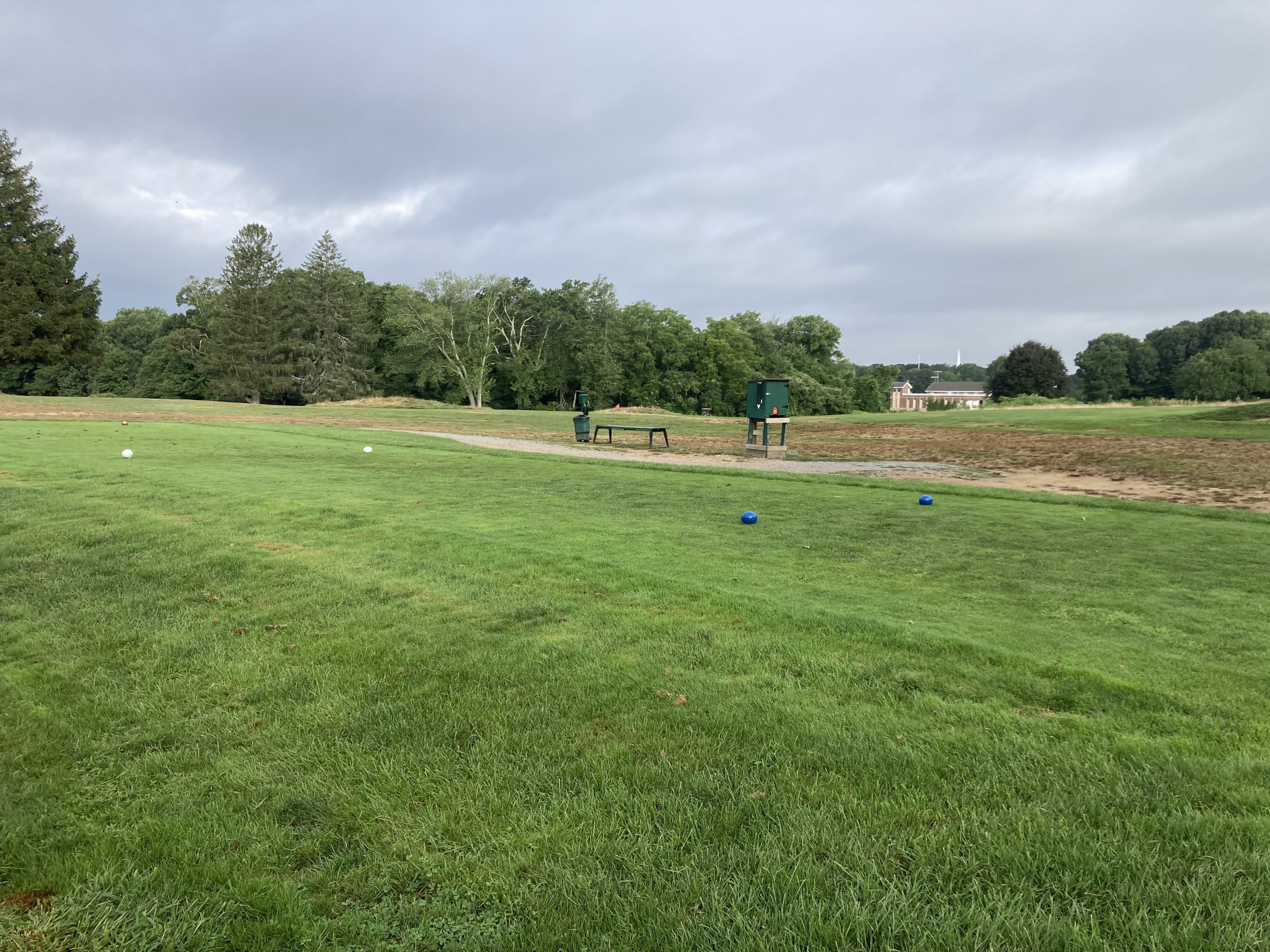
Over two years later, the committee hasn’t been able to proceed with the work which was more expensive than anticipated. Below are photos I took a few weeks ago at the course (when it was less rainy):
The new Article seeks to add $433,546 of CPA funding and extend the project timeline. According to the Warrant:
After the 2024 funding approval, the project went out to bid and came back substantially higher than was funded. An independent technical review provided materially new information that was not available at the time of the 2024 Town Meeting vote. The evaluation also identified inadequate water pressure, necessitating the addition of a pump station.
While the Select Board unanimously voted to support the Article, Advisory Committee members voted to not support it.
If the Article is approved, the total project budget will be $1,087,296 with only (what they believed was) $100,000 of that coming from the Southborough Golf Course Revolving Fund and $987,296 appropriated from CPA accounts (including $141,821 in contingency funding).
[Editor’s Note: Select Board Chair Kathy Cook reached out and informed me that the $100,000 contribution from the Revolving Fund noted above and 10% noted below are inaccurate. That doesn’t include $50,000 previously contributed by the Revolving Fund for the project. I pointed out that the figures are from the summary under the Article in the Warrant.]
Advisory member Howard Rose recalled that when the Town originally approved purchasing the golf course, the pitch was that after initial investments it would become self-funded. Some members expressed willingness to use CPA to cover some portion of the budget. But all opposed having the course revolving fund cover (what they believed was) only 10% of the project with 90% covered by the Town’s CPA fund.
They discussed the need to explore other funding options, including increasing users’ green fees. Member Erik Glaser suggested the Golf Course Committee could even look at holding fundraisers to cover more of the project costs.
According to Cook in a call I received after originally posting this story, the idea of borrowing against the revolving fund was initially explored by the Select Board. But it was ruled out after Bond Counsel advised them it would be borrowing against future fees that they can’t ensure will be collected. She also noted that raising greens fees would risk the course losing golfers to other courses, thus reducing the revenue collected.
Updated (10/1/26 10:18 am): I updated details above after hearing from Select Board Chair Kathy Cook. She informed me that the figures were inaccurate about how much of the project is funded by the Golf Course Revenue Fund. She also told me that the fund can’t be borrowed against based on future assumed earnings.

This article should be voted down.
The facts are that we, the taxpayers are already committed to pay over $550,000 for this project. Now we are asked to provide an additional $433,546 to cover the cost overruns. The clear fact is that this project benefits 2 groups, golfers and the management company that runs the golf course. The management company will benefit by reduced labor costs in operating the irrigation system. Thus, we are using public monies for private benefit.
The golf course should carry its own weight. That is what we were promised when we bought the course. There is a simple way to do this that does not reach into your pockets. An irrigation surcharge of about $1.50 per round is sufficient to service the debt required. Based on the 2025 number of rounds (28,466)and a 20 year borrowing at 4.5% the actual number is about $1.44 per round*.
If the golfers and the management company are not willing to pay $1.50 per round to improve the operation of this course then the project has no merit.
* This figure assumes borrowing the full $533,546 with no transfer from the golf revolving fund. If $100,000 from the revolving fund is used the per round surcharge would be less than $1.25.
According to Select Board Chair Kathy Cook, Bond Counsel has advised the Town that they can’t borrow against the revolving fund based on future fees, since those fees aren’t ensured. They could dry up.
She also informed me that $50,000 from the Revolving Fund was already put towards the project. That means that it is actually $150,000 of the over $1M budget. (I informed her that the Warrant summary doesn’t include that $50K.)
Beth
I am not advocating that the borrowing be serviced from the Golf Course Revolving Fund. Rather, I believe we can use a structure similar to the way we have used CPA monies, which are also not guaranteed, to service the debt we have incurred for things like the purchase of the Chestnut Hill development restrictions.
The borrowing, like Chestnut Hill, would have to be a general obligation of the town. The funds to required to offset the cost of the borrowing would require a renegotiation of the current management agreement and presumably would also need to be included in a future agreement when the current agreement expires.
The golf course needs to stand on it’s own two feet as we were promised.
I totally support Al’s position here. We were promised a self-sustaining system. By all means, water the course, with COURSE funds. OR, better yet, change the course to a xeriscape landscape. We have far better things to do in our community with community money than watering a golf course used by 2% of our residents.