
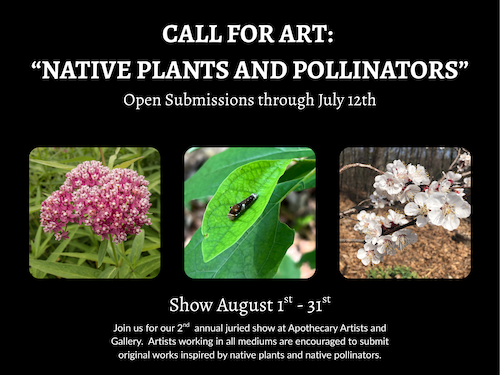
Above: The downtown art gallery is calling artists to be part of a special exhibit this fall. (images cropped from flyer)
Last summer, Apothecary Artists and Gallery invited artists to submit artwork to include in a juried exhibit “inspired by the beauty and vitality of native plants and native pollinators.” This year, they’re doing it again.
“Artists of all experience levels and disciplines” are invited to apply to be part of the exhibit by Friday, July 12th. Accepted works need to be ready to be dropped off at the studio 7/18-21 for the exhibit that will run August 1 – 31.
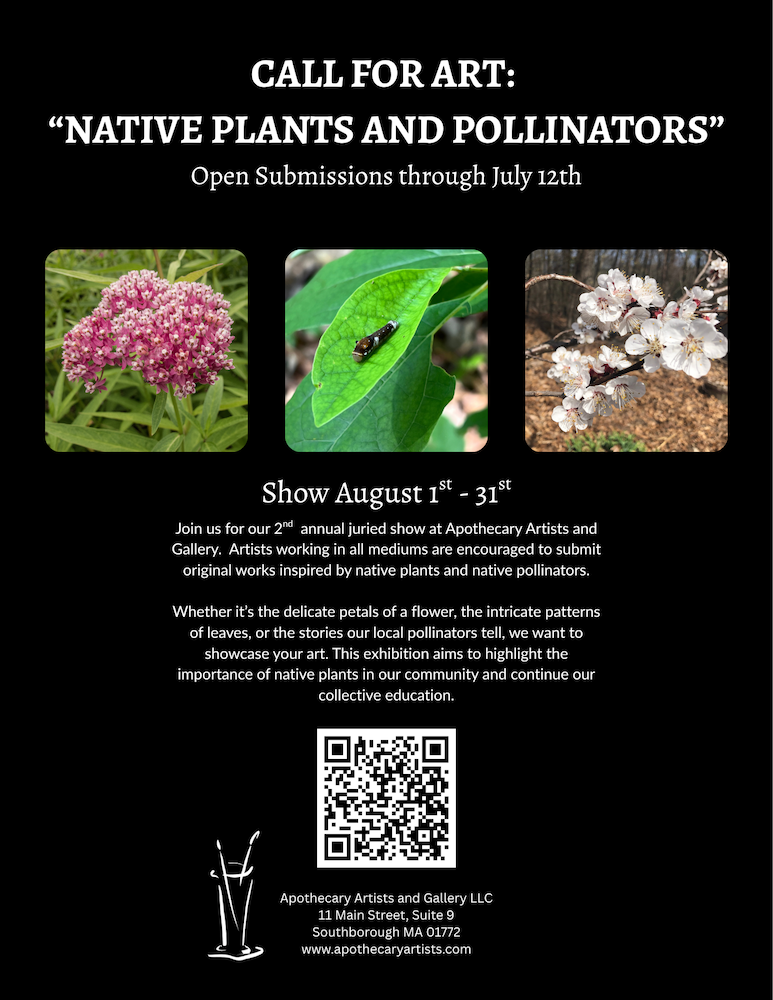 Organizers encourage artists to submit original works of any medium. While submissions can include “photography, mixed media, painting, sculpture, and more”, hanging works are preferred.
The works don’t have to be “for sale” to be included in the exhibit. (But if they are sold, the studio would take a 30% commission.)
As for the subject matter, organizers again describe:
Whether it’s the delicate petals of a flower, the intricate patterns of leaves, or the stories our local pollinators tell, we want to showcase your unique artistic vision. This exhibition aims to highlight the importance of native plants in our community and continue our collective education.
The inspiring plants/pollinators must be native to New England. Those that are considered non-native species won’t be accepted.
For those unfamiliar with the concept, that doesn’t mean that if you see it in your yard or local nature, it’s native. Native species are ones that have long roots in the past, believed to date back thousands of years (and likely evolved in the region). A specified example of a “non-native species” that won’t be accepted is honey bees.
The website notes points artists to tools like Native Plant Trust’s “gobotany” to check on plants. No specific info is provided on how to identify native pollinators. But, applicants are encouraged to email them if in doubt.
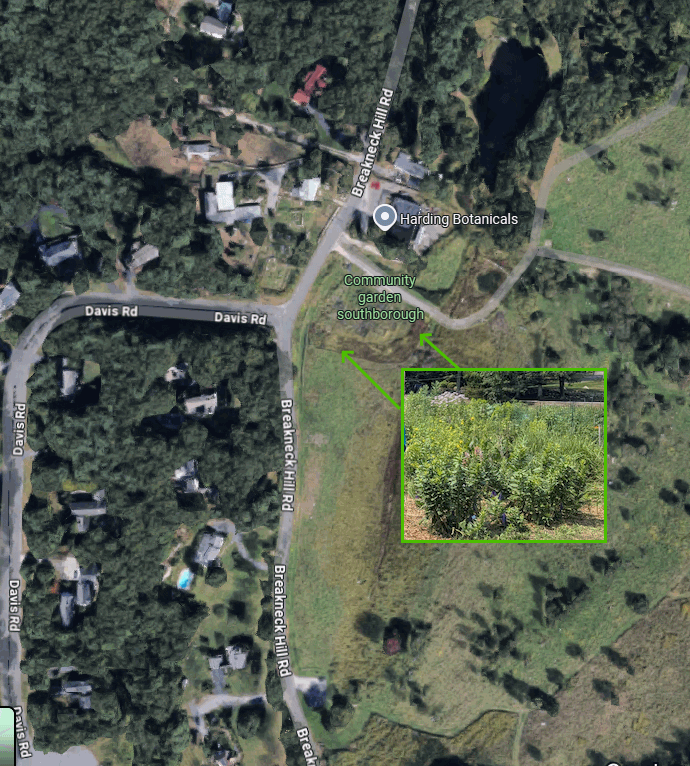
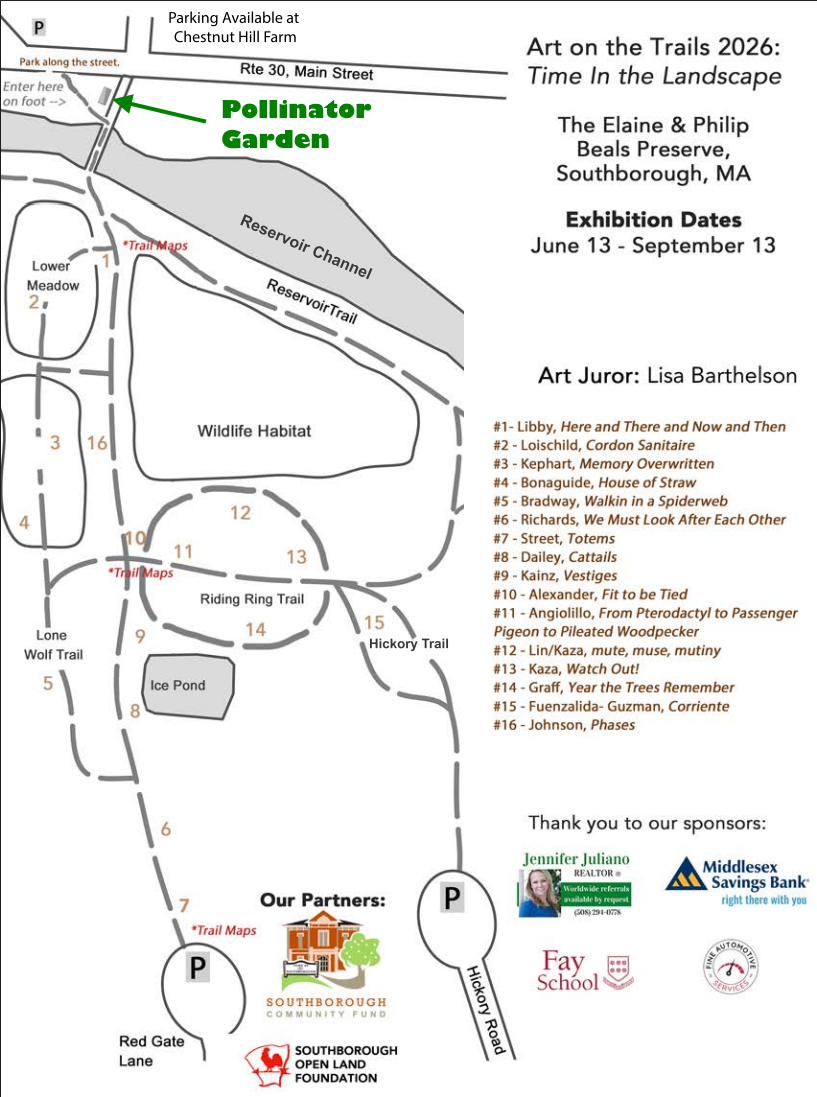
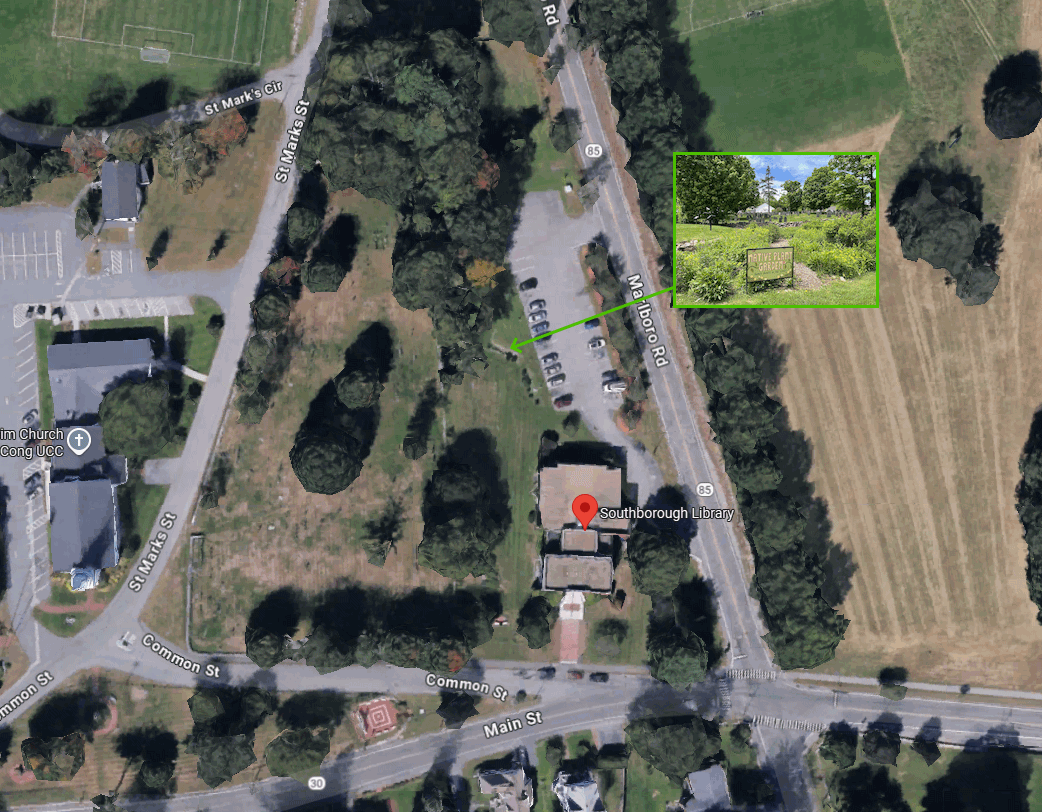
Tip: Artists looking for a setting to find appropriate inspiration could head to one of the Native Plant gardens in town. Locations include the Beecology Research Garden at Breakneck Hill Conservation Land, the Whit Beals Biodiversity Through Pollination Garden at SOLF’s Beals Preserve, and the Native Pollination Preservation Garden by the Southborough Library parking lot. (I created/edited some maps below to help readers find them.)
You also may be inspired by looking at the variety of works that were included in the inaugural exhibit. Below is a post that Apothecary Artists shared on Facebook last fall:
For more details and to apply, click here.
