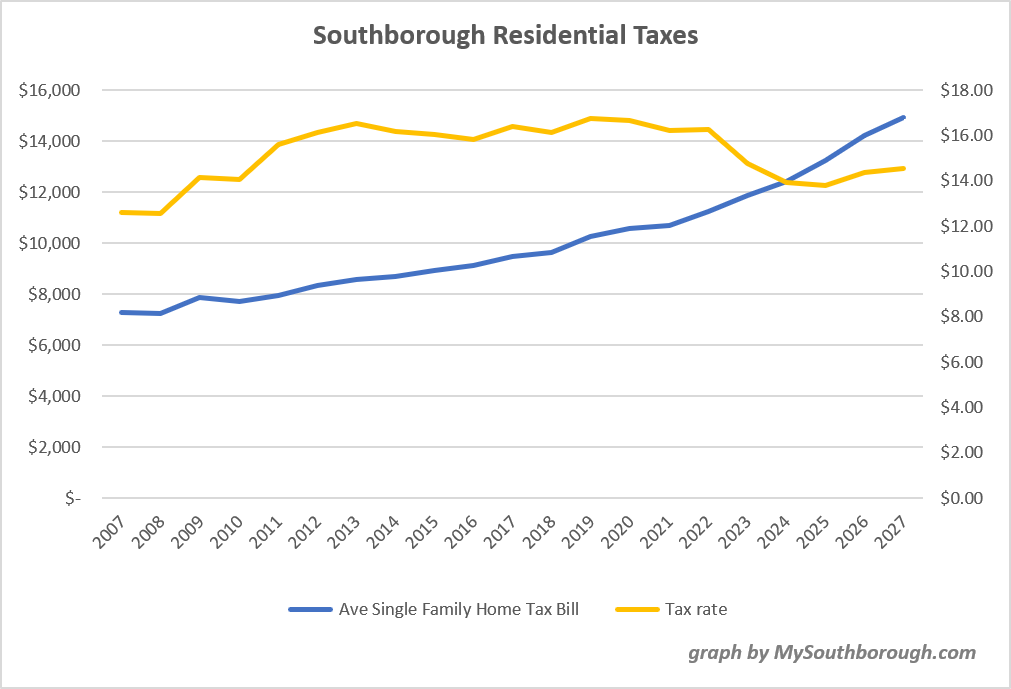
Above: Residential Tax bills continue to increase. (graph based on data in Town reports and presentations)
In a hearing last night, the Assessor estimated that bills for an average Single Family Home in Southborough will increase by 5.01%.
That’s up from the 4.6% increase projected by Town officials last spring before Annual Town Meeting.
In the November 4th Tax Classification Hearing, the Select Board voted 4-1 to stick with a “single tax rate”. Based on that decision, the Assessor’s formula calculated the rate to be $14.44 to cover the Town’s tax levy in 2027.
An average Single Family Home will see an increased property tax of $713.00, split over four quarters. (That doesn’t include the CPA surcharge.) That is $59 more than was projected in Advisory’s Report to Annual Town Meeting in April.
The average single family home appraised value for FY26 is now $1,027,800 (as of last January). That’s $36,800 more than last year.
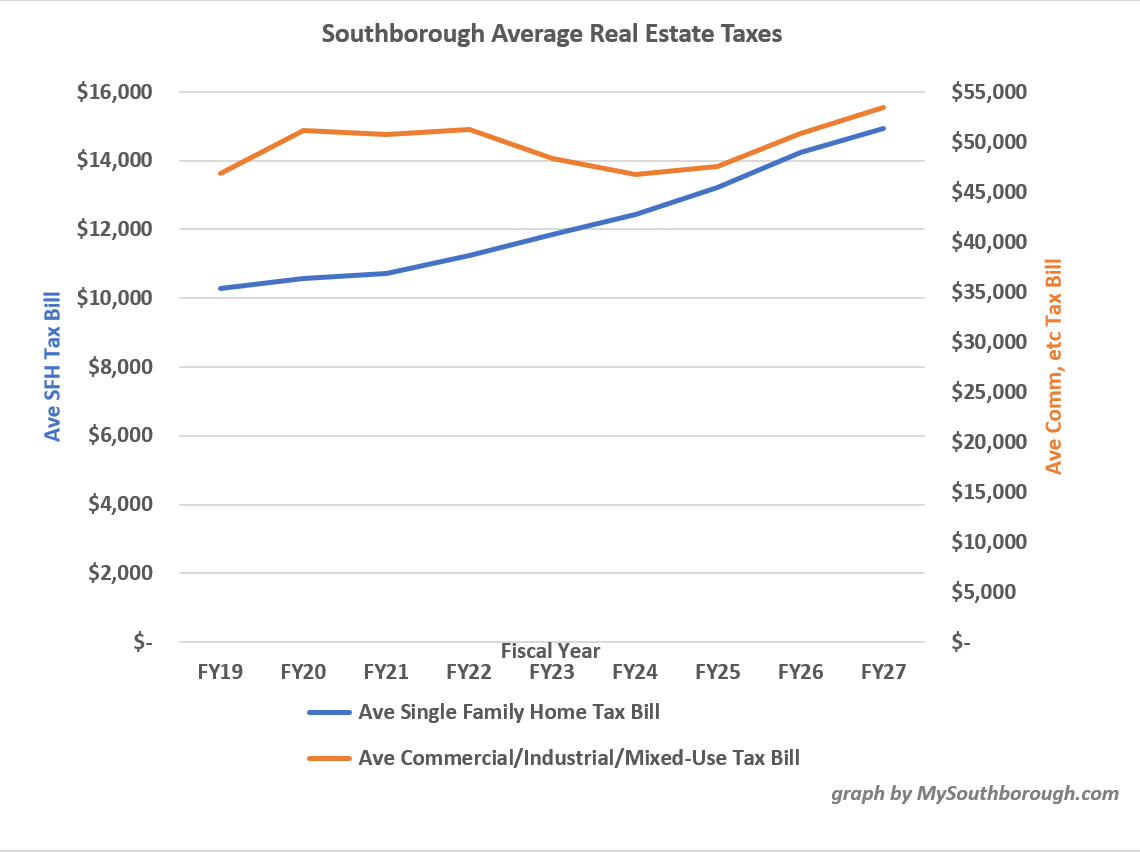
When Advisory conducted its report for Town Meeting, they assumed there wouldn’t be another significant value shift between residential and CIP property tax values. But while Commercial property values increased more than residential, that was offset by assessments for Industrial and “Personal Property” that didn’t keep pace.
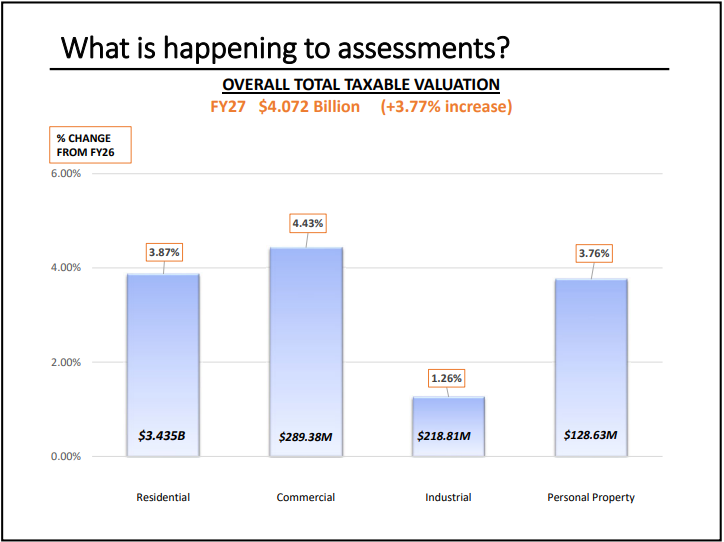
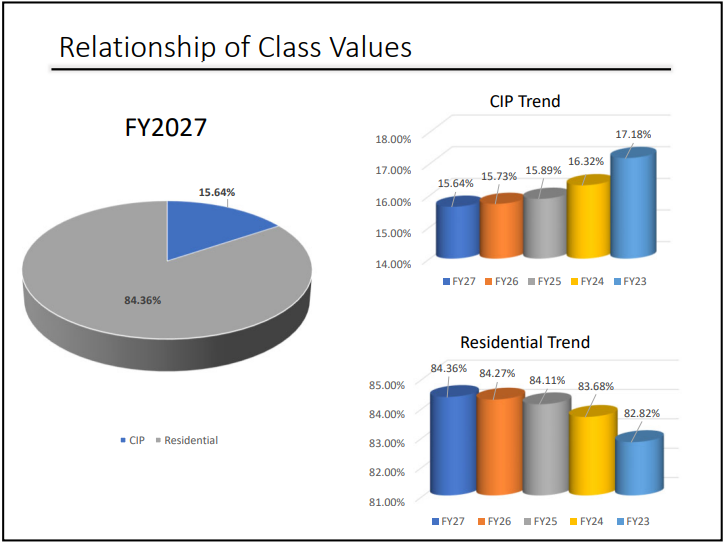
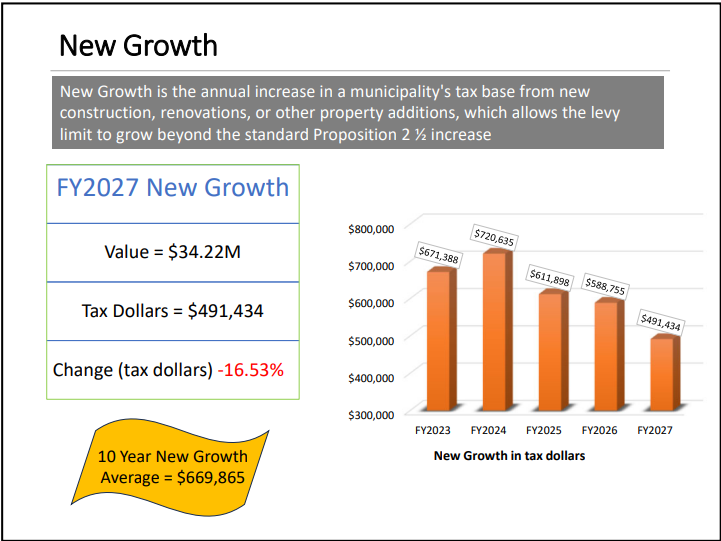 In last night’s presentation to the Select Board, Assessor Paul Cibelli again stressed a continued decrease in “New Growth” as also contributing to home owners’ tax burdens.
Exemptions dismissed and Split Rate not adopted
The presentation and discussion went they way they pretty much always do. Cibelli made his usual case against splitting tax rates. He argued that splitting out the rate for the CIP properties couldn’t save residents anything significant without spiking the tax burden for businesses in town. Chair Kathy Cook agreed, describing restaurants as having trouble just staying in business.
Select Board member Tim Fling, who unsuccessfully advocated for a split rate last year, took another crack at it this year. He called for technically splitting the rate, with a tiny difference, just to set the precedent that the rates are split. Then adjustments in the future wouldn’t be that big of a deal. Other members didn’t buy in. The single rate was adopted 4-1.
I’ve done plenty of coverage over the years of the debate over splitting the tax rate to increase commercial taxes in order to give homeowners relief on their taxes. But it’s not the only version of tax relief the Select Board votes against adopting each year.
Another option allowed under state law would provide a discounted rate to eligible homes under certain assessed value. That would need to be made up for by the homes ineligible for the discount, raising the rate for those homes. Since it would need to be made up for within the residential tax base, the higher rate wouldn’t be applied to commercial properties. (Of course, that could be addressed if the Town adopted a Split Tax rate, for residential and commercial, but the majority of the board opposes that approach.)
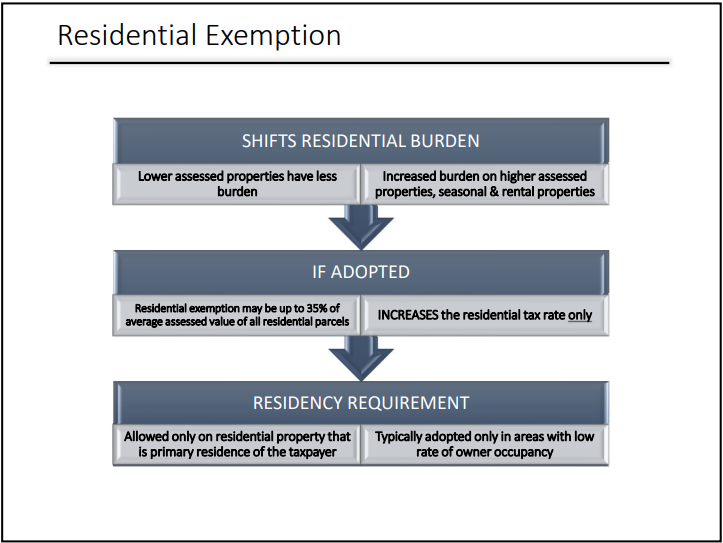
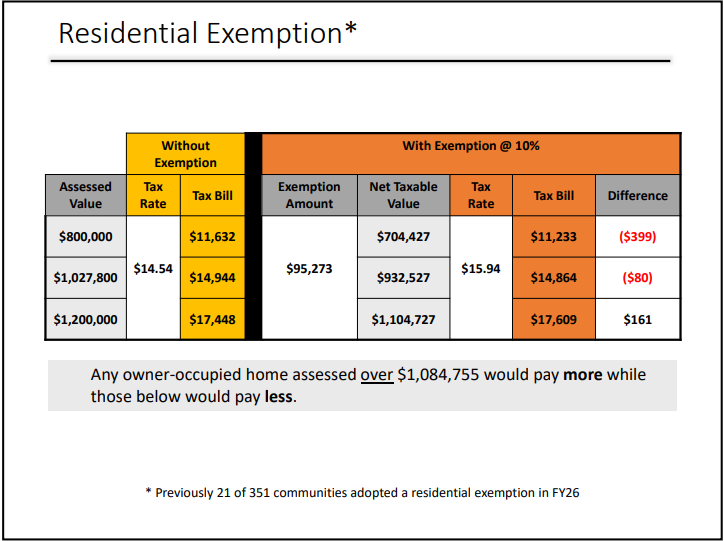
In 2023, Patricia Fiore argued for pursuing the Residential Exemption. At that time, Select Board member Sam Stivers said that he would need to see data demonstrating a link between the lower valued homes and seniors on fixed incomes before voting to pursue an exemption.
In last night’s meeting, members discussed the potential for considering a Senior Exemption. That’s a separate process that would require Town Meeting and State Legislature approval. Cibelli planned to provide them with information to consider at their next meeting.
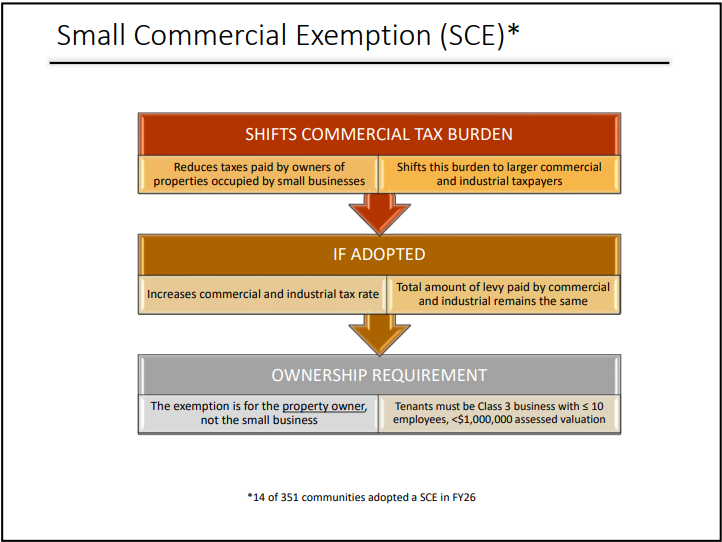 Worth noting, residences aren’t the only properties that could qualify for a special exemption. It can also be considered for lower valued businesses in town. However, this one is a little more complicated. The exemption is based on the size of the business(es) operating on properties. But for businesses that have commercial landlords, they are the ones who pay the property taxes, and therefore the ones that would receive the exemption.
What it means for homeowners
Actual impacts will vary as home valuation changes can vary widely each year. (Note: For residents who are struggling, there are some annual tax relief programs you may be apply for in the spring. Read my post from March here.)
To learn more about checking on your own updated home value, click here. (The Online Property Cards are still showing outdated data from FY25 assessments.)
To calculate your FY26 property tax, multiply the assessed value by 14.44/1,000. (The amount paid for the preliminary FY27 bill that was due on November 2nd will be deducted as a credit from the total owed for the fiscal year.) You can find assessed values in the Assessor’s online Property Card portal here. (It’s the field labeled “Total Value”.)
You can view the Assessor’s full presentation deck here. Below are a couple of my updated graphs tracking the town taxes.