
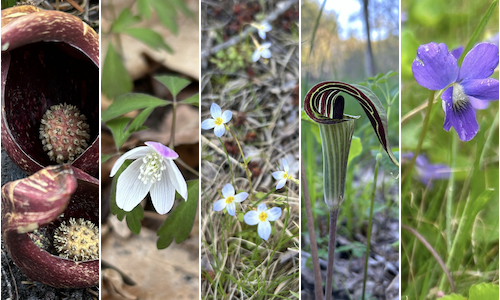
Above: Take a peek at some of the fleeting early bloomers in SOLF’s preserved open spaces. (images cropped from photo contributed by SOLF’s Debbie Costine)
[This post is part of a special guest series focused on appreciating nature in Southborough, contributed by the Southborough Open Land Foundation (SOLF), a non-profit dedicated to preserving and stewarding natural resources here in town. Reminder: SOLF is seeking applicants to serve on their board, supporting their mission to” to preserve, protect, conserve, and enhance the natural resources” in Southborough. To read more about that, click here.]
When the first warm spring-like day arrives around late March, many of us go out in search of the first flowers, as if to greet old friends. These early bloomers are often fleeting; they are not in bloom for long and they can be easy to miss if one is walking quickly. Yet they are important for our native pollinators who need sustenance. Here are some examples roughly in order of when they appear.
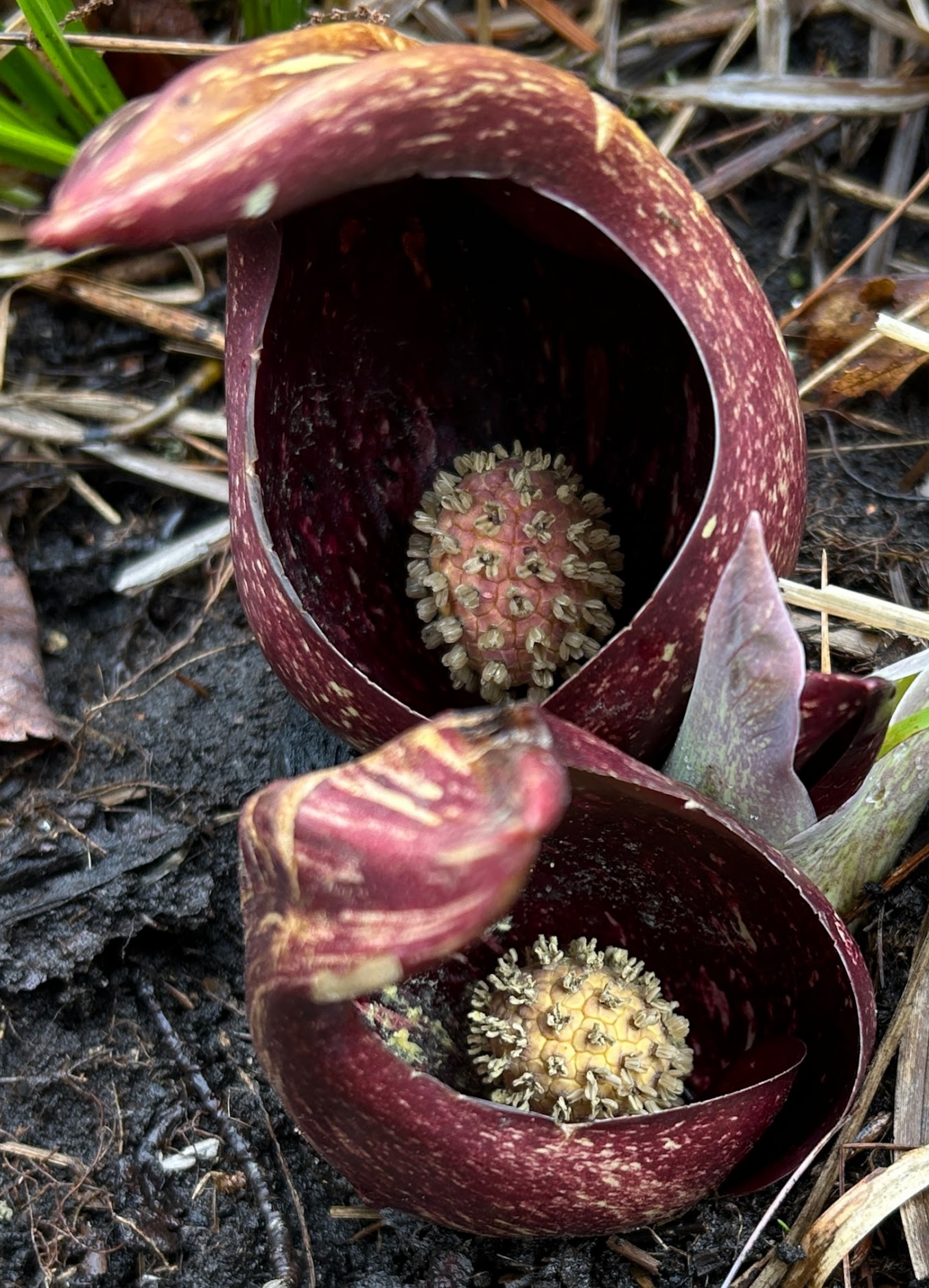 Skunk Cabbage – A maroon hood-like structure, the “spathe,” can appear even in snow because inside it is the spherical “spadix” that can produce heat! This creates a melting circle around the plant! The spadix has tiny flowers and emits an odor that attracts insects that pollinate it. Large green leaves form later. Yes, the plant smells a bit like a skunk. (Learn more here.)
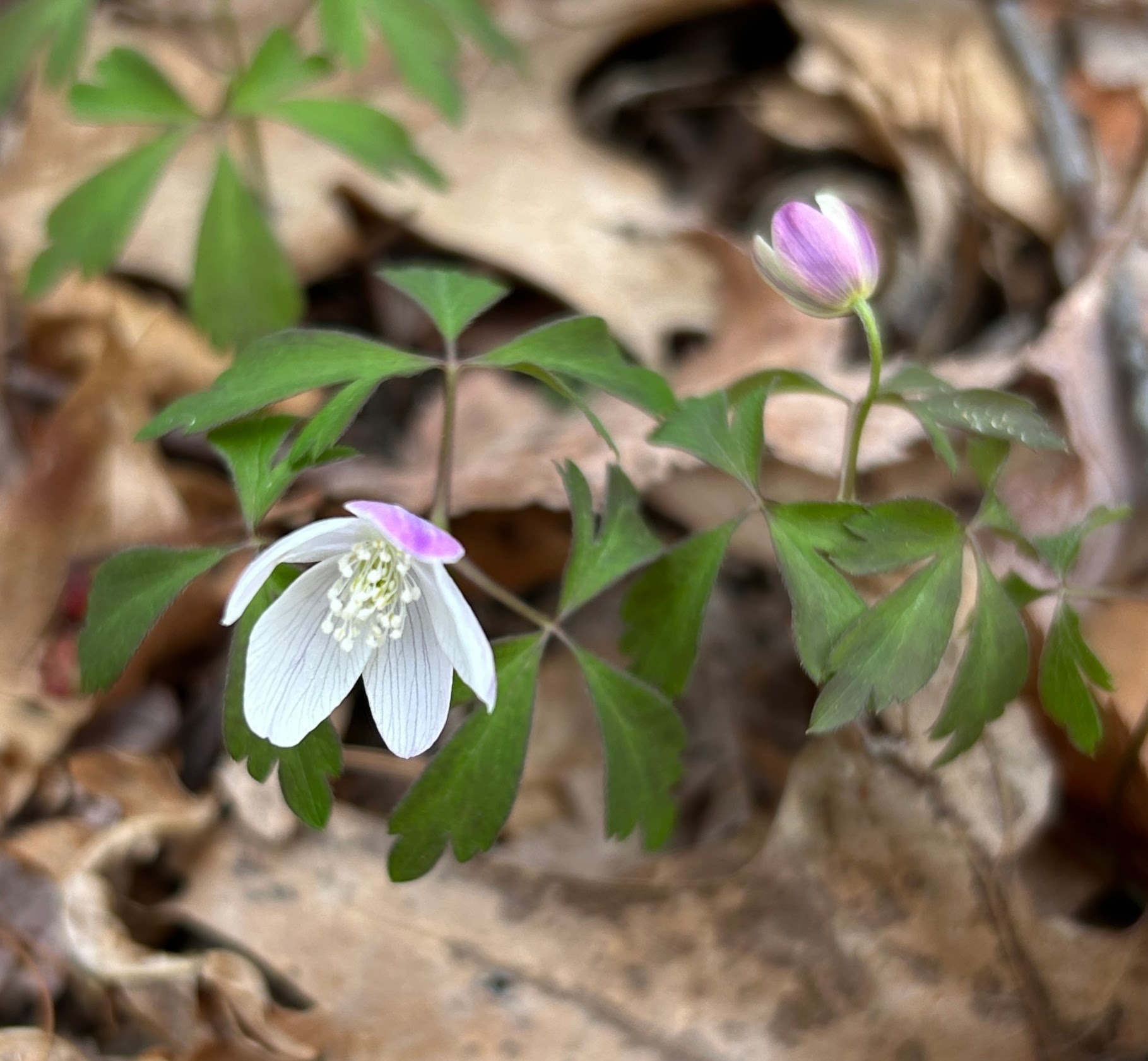 Wood Anemone – There is a particular spot in the woods near me where I begin checking regularly; first for the leaves and then the delicate flowers. Some are pure white and others have a tinge of pink.
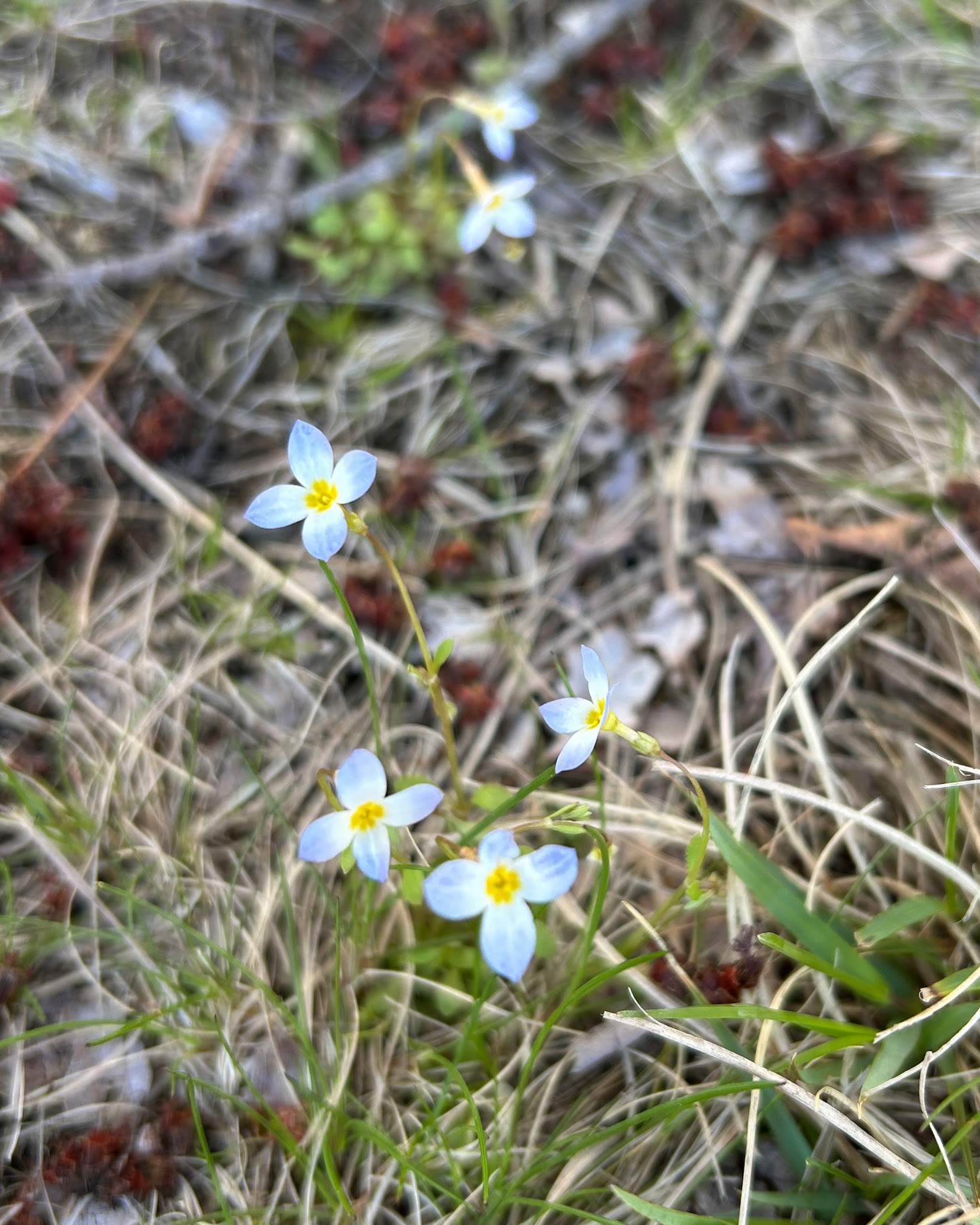 Bluets These tiny, delicate flowers tremble with the smallest breeze. They range from white to light blue and are found in open, sunny places. The bluets pictured below were found on the Old Farm Lane at The Beals Preserve.
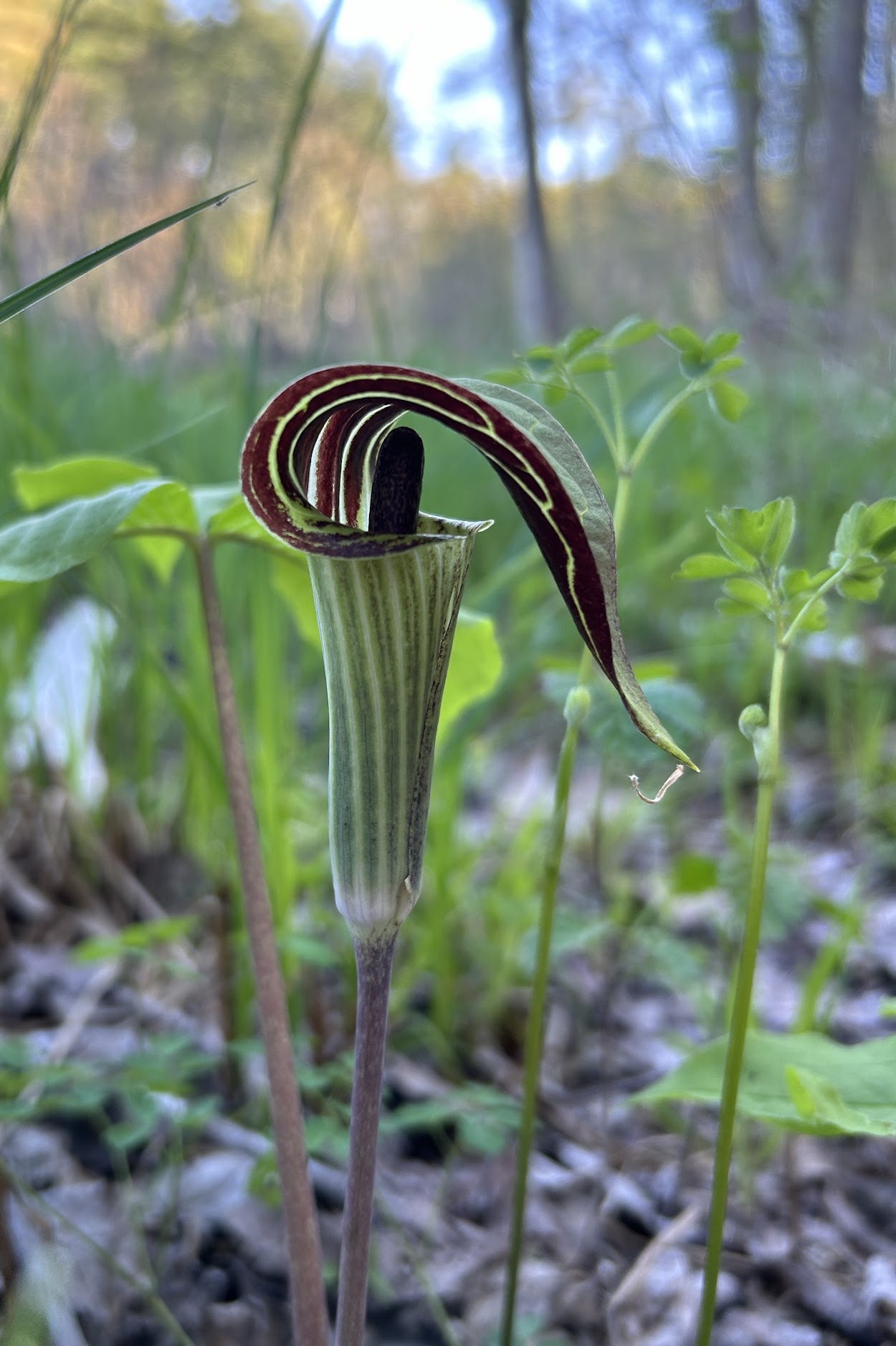 Jack in the Pulpit is named for the velvety dark brown columnar spadix which hides under the dramatically striped spathe. These are also blooming discreetly now along the stone walls of the Beals Preserve. (Learn more here.)
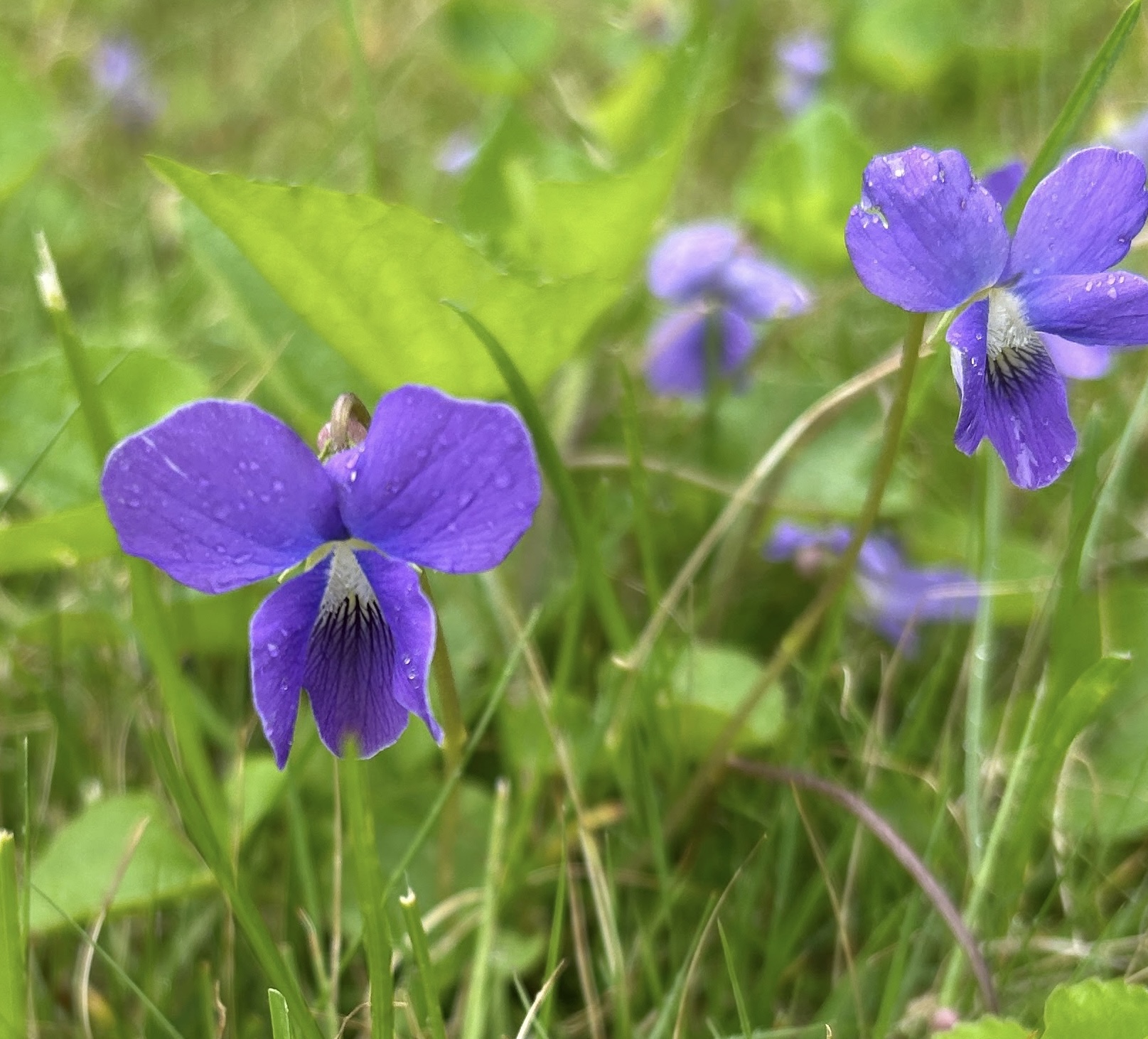 Common Blue Violet is a little plant that thrives in shade as well as sun. The seeds develop in capsules, that, when ripe, launch the seeds as far as 9 feet! The flowers and leaves are edible and have been used in various herbal remedies.
Debbie Costine
Southborough Open Land Foundation
SOLF.org
Want to learn more about SOLF, or volunteer or donate? Check out our site, we’d love to hear from you.
Debbie Costine (a SOLF Trustee, artist and curious naturalist)
SOLF – Southborough Open Land Foundation
